Physiotherapy
& clinics
Explain treatments, introduce practitioners and make first-visit information easy to find.
Health & wellbeing
For clinics, spas, movement studios and wellness businesses. Thoughtful design, clear service information and an easier way for people to book or get in touch.
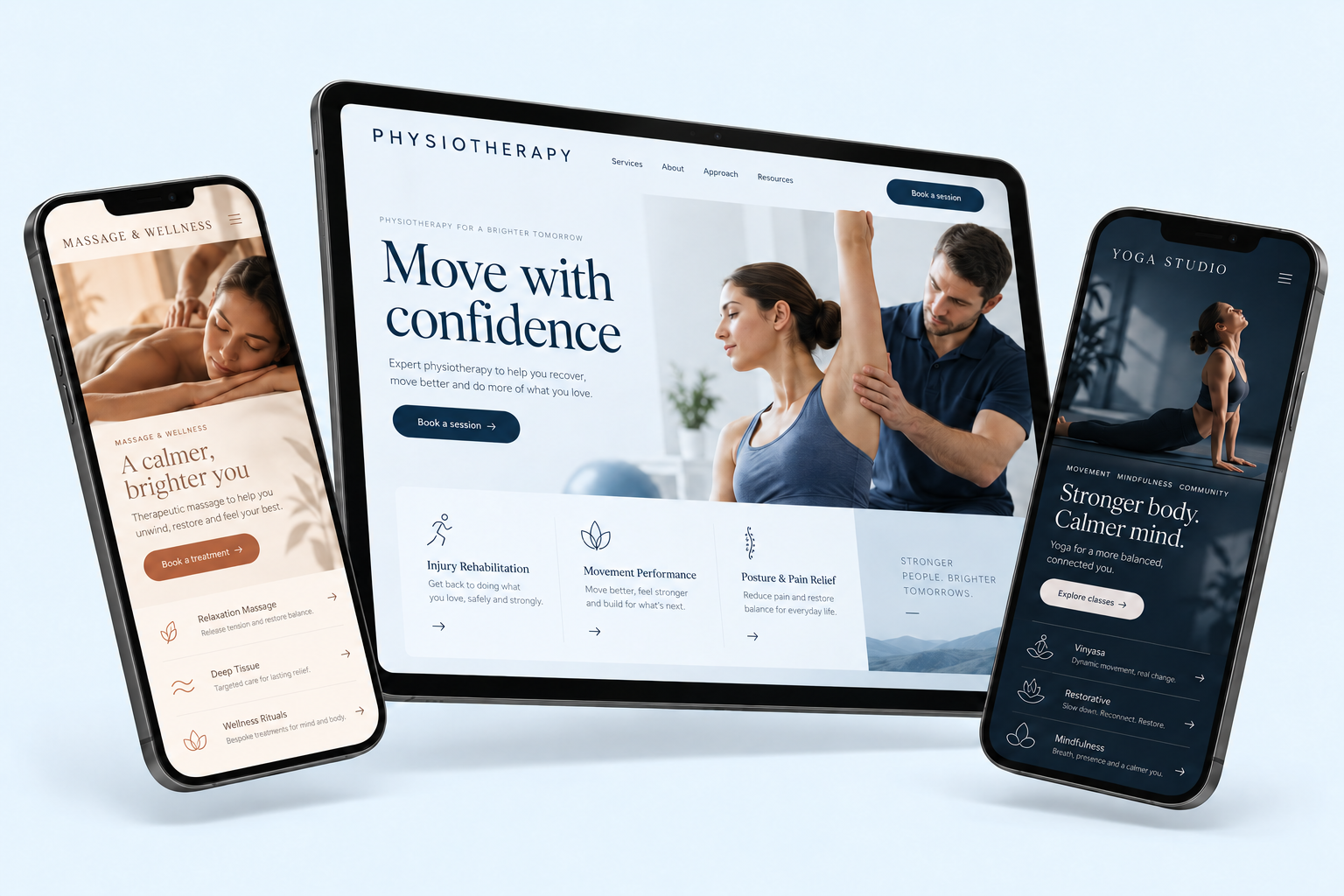
Your business, online
Before someone books a treatment or joins a class, they want to know they are in the right place.
Your website should explain your services, introduce the people behind them and answer the practical questions that come before a first visit.
Telveni brings together website design, clear content and the booking tools you already use. The project starts with your business and the people it serves.
Who we work with
A physiotherapy appointment, a massage treatment or a first yoga class: each starts with different questions. Your website should reflect that.
Explain treatments, introduce practitioners and make first-visit information easy to find.
Present the setting, treatment menu, prices and the experience a guest can expect.
Make classes, instructors, facilities and membership information straightforward to explore.
Show your work, explain your services and give clients a clear route to an appointment.
Explain your products and approach, with an online presence that supports your existing store.
Explain your area of practice, introduce your team and help people understand how to enquire.
Services
A new website, a focused redesign or a better booking route. The scope is built around what your business actually needs.
Existing tools are reviewed before recommending anything new. You receive a written proposal with deliverables, costs and responsibilities.
Clear page structure, considered design and layouts that work on phones as well as larger screens. Treatments, practitioners, prices and locations organised for your audience.
New websites and focused redesigns.Connect your website to the booking service you already use. Make appointment and class-booking links visible, explain the available options and provide an agreed contact route.
Links and supported embeds; deeper integrations assessed separately.Shape your supplied information into useful pages. Clear headings, page titles, image descriptions and practical details help visitors understand your business.
Professional and clinical statements remain subject to your approval.Plan how services, classes, prices, photographs and opening hours will be kept current. Handover and any ongoing support are agreed before launch.
Defined support scope, editing arrangements and provider costs.A practical digital system
The connection is scoped around the tools your business uses.
What makes a useful website
A beautiful page matters. So does knowing what is available, where to go and how to book.
Working together
Review your audience, services, existing website and tools. Agree the priority before designing.
Set the pages, connections, content responsibilities, timeline, revision rounds and cost.
Develop the website with your feedback. Check the content, mobile layouts and agreed booking routes.
Publish, explain access and ownership, and agree how future edits and support will work.

The person behind Telveni
Hi, I’m Tina.
I’m a physiotherapist and yoga teacher with a background in UX design and more than a decade running an online business.
I know how much explanation can sit behind a seemingly simple service. A good website helps people understand what you offer, what to expect and how to get in touch.
At Telveni, I bring that understanding to the content and design. You work directly with me, with any additional technical support agreed as part of the project.
Questions
Often, yes. The first step is to check how it connects to your website. A direct link may be enough; supported embeds and deeper integrations need their own feasibility check and scope.
Not necessarily. If a few better pages or a clearer booking route address the priority, a focused improvement may be more useful. Access and platform restrictions are checked first.
Clinical intake should stay in your approved systems. Any enquiry form is scoped around the information it needs, where that information goes and your privacy requirements. Patient portals and clinical software require a separate specialist project.
Ownership and access are written into the agreement. The preferred approach is for your business to hold its domain and provider accounts, with delegated access for the project.
Your logo, approved service information, prices where relevant, photographs you have permission to use, contact details and existing booking links. One person should be responsible for consolidating feedback and approving the content.
The agreement sets out handover, the period for reporting faults in the agreed work, and any ongoing support. New content, extra features and provider subscriptions are defined separately.
The price depends on the number of pages, the content, the platform and any connections. After a short discussion, you receive a written proposal showing the project fee and separate ongoing costs.
Your next project
Tell Tina about your business, your current website and the priority you would like to address.
A short conversation can establish the scope, the tools involved and whether the project is a good fit.
hello@telveni.com